
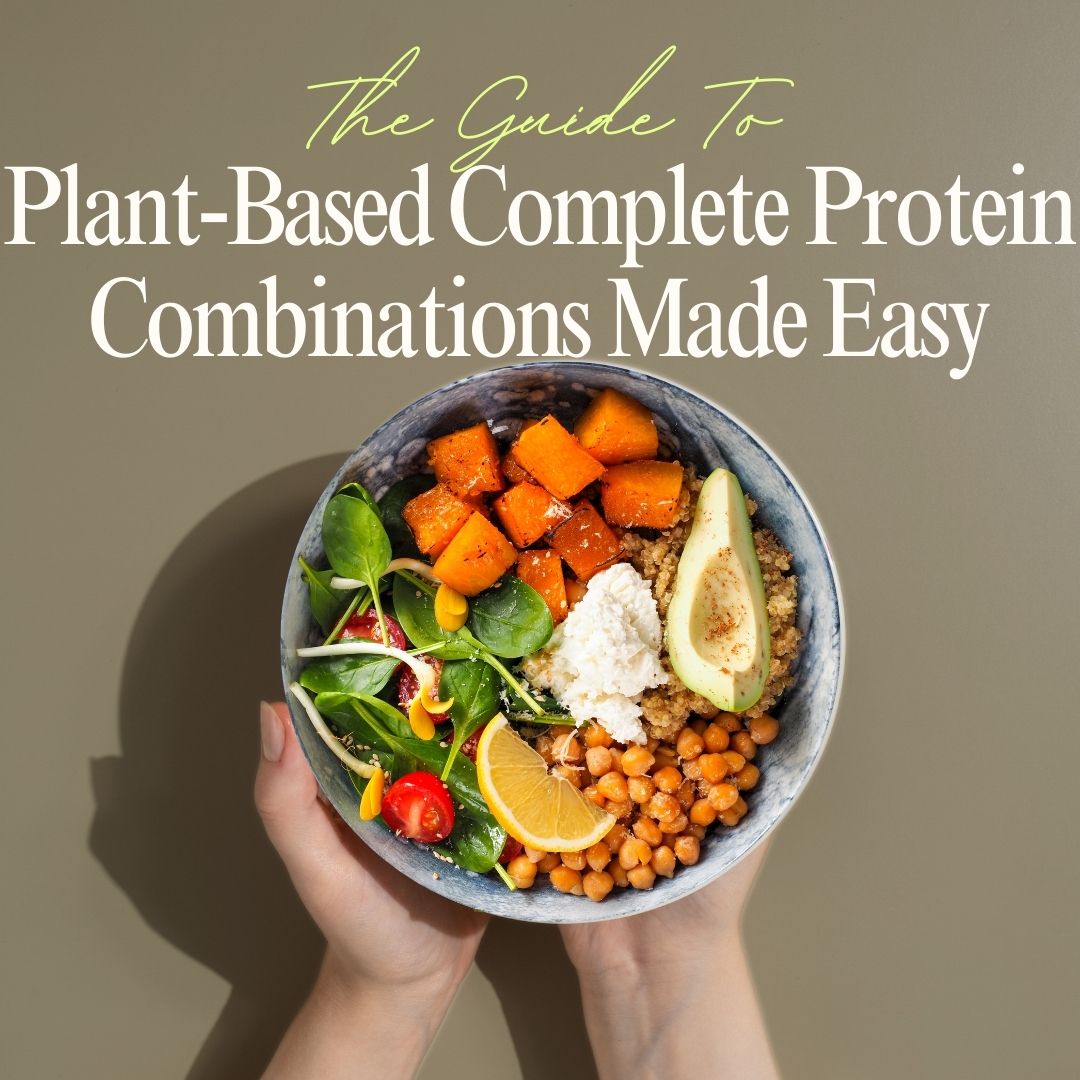
If you’ve ever thought about going plant-based, you might have heard that plant proteins are “incomplete” and need to be carefully combined at every meal. Luckily, that’s an outdated myth! While plant proteins do have varying levels of essential amino acids, your body is pretty smart, it stores these building blocks throughout the day and uses them as needed.
By incorporating a variety of plant-based combinations for complete protein throughout the day, you can easily meet your nutrient needs without overthinking every meal. Instead of stressing over every plate, you just need to enjoy a mix of plant-based foods over the course of the day to get the fuel your body needs.
But don’t just take my word for it! Nutrition experts agree:
- According to the NATIONAL INSTITUTES OF HEALTH (NIH), appropriately planned plant-based diets are nutritionally adequate and can support a healthy lifestyle.
- The Mayo Clinic: TIPS FOR EATING MORE PLANT-BASED PROTEINS emphasizes that plant-based proteins can provide all essential amino acids as long as you eat a varied diet.
So let’s break it all down, how much protein you need, which plant foods are the best sources, and simple plant-based complete protein combinations to make meal planning a breeze.
How Much Protein Do You Actually Need?
A common concern for those transitioning to a plant-based diet is getting enough protein – but it’s actually easier than you might think! The general guideline for protein intake is 0.8 grams per kilogram.
For years, the standard recommendation was roughly 0.8 grams of protein per kilogram of body weight, the minimum to prevent deficiency. For a 150-pound person, that is about 55g per day.
However, the new 2025-2030 Dietary Guidelines have officially increased this target to 1.2 – 1.6g/kg to support better muscle health and metabolic function as we age. Here is how those numbers look side-by-side:
| Body Weight | Old Minimum (0.8g/kg) | New Health Target (1.2 – 1.6g/kg) |
| 150 lbs (68 kg) | ~55g / day | 82g – 110g / day |
| 180 lbs (82 kg) | ~66g / day | 98g – 131g / day |
As always, if you’re active, your needs may be slightly higher, but luckily, plant-based foods can easily provide that without needing to track every bite!
Myth-Busting: The “Incomplete” Protein Rule
You might have heard that plant proteins are “incomplete,” meaning they don’t contain all nine essential amino acids, the ones our bodies can’t make on their own, in the right proportions. While it’s true that some plant foods are lower in certain amino acids (like lysine or methionine), the idea that you need to combine them at every single meal has been debunked.
TRUTH: Your body maintains an “amino acid pool.” As long as you eat a variety of plant-based foods throughout the day, your body will pull what it needs from that pool to create complete proteins. No stress required!
High-Protein Plant-Based Foods (No Combining Required!)
Many single plant-based foods are naturally high in protein and can do the heavy lifting for your daily goals.
Standalone Protein Sources (Per Serving):
- Lentils – 18g per cup
- Chickpeas – 15g per cup
- Quinoa – 8g per cup (A natural complete protein!)
- Tofu – 20g per cup
- Tempeh – 30g per cup
- Hemp Seeds – 10g per 3 tbsp
- Nutritional Yeast – 8g per 2 tbsp
The “Wildcard” Protein Powerhouses:
If you want to branch out, try Seitan (made from wheat gluten), which packs a massive 25g of protein per 3.5oz serving, or Edamame, which provides 18g per cup and is a complete protein all on its own!
Best Plant-Based Combinations for Complete Protein
Even though you don’t need to combine foods at each meal, pairing certain plant foods together naturally boosts amino acid variety. Plus, these combos are PLANT-BASED STAPLES for a reason, they taste great together!
| Food Category | Example Pair | Why it Works |
| Legumes + Grains | Rice & Beans or Lentils on Toast | The most classic way to balance amino acids. |
| Seeds + Grains | Oatmeal with Hemp or Chia Seeds | Perfect for a high-fiber, high-protein breakfast. |
| Nuts + Legumes | Apple with Peanut Butter or Hummus | Great for snack-time protein “bridging.” |
| Grains + Nuts | Whole Wheat Pasta with Walnut Pesto | A delicious way to hit your daily goals. |
Pro Tip for Mixed Households: These combinations are the perfect “base” for families with different dietary needs. A big batch of rice and beans can be the foundation for everyone – one person can top theirs with avocado and lime, while another adds their preferred protein. It keeps mealtime simple for the cook!
Bonus Tip: Make Protein a Meal Planning Priority
By thinking protein-first when planning, you’ll naturally get the right balance without the headache.
Try This Simple Meal Planning Hack:
- Choose a plant-based protein (tofu, lentils, seitan, etc.).
- Add colorful veggies for micronutrients.
- Include healthy fats (avocados, nuts, or seeds).
- Pair with a grain or starchy veggie (brown rice or sweet potatoes).
The Bottom Line
Whether you’re enjoying a peanut butter sandwich or a hearty bowl of lentil soup, you are fueling your body with plenty of plant-based protein. As long as you keep a diverse range of foods in your rotation, your body will handle the rest!
Common Questions About Plant-Based Protein
Transitioning to a plant-based lifestyle often brings up questions about meeting nutritional needs. Here are the most common questions regarding protein combinations and how to balance your diet for optimal health.
Plant-based complete protein combinations are pairings of different plant foods, like grains and legumes, that together provide all nine essential amino acids. While you don’t need to eat them in a single sitting, incorporating various combinations throughout the day ensures your body has a full “amino acid pool” to draw from.
No. The idea that you must combine proteins at every meal is an outdated myth. Your body stores essential amino acids from the various foods you eat over the course of a day and combines them as needed to build and repair tissues.
Yes! Several plant-based foods contain all nine essential amino acids in the right proportions. Examples include quinoa, buckwheat, tofu, tempeh, and edamame. Including these in your diet is a simple way to hit your protein goals.
Some of the most common and delicious pairs include rice and beans, hummus (chickpeas and tahini), whole-wheat bread with peanut butter, and oatmeal topped with hemp or chia seeds. These pairings naturally balance out the amino acid profiles of each food.

Leave a Comment