
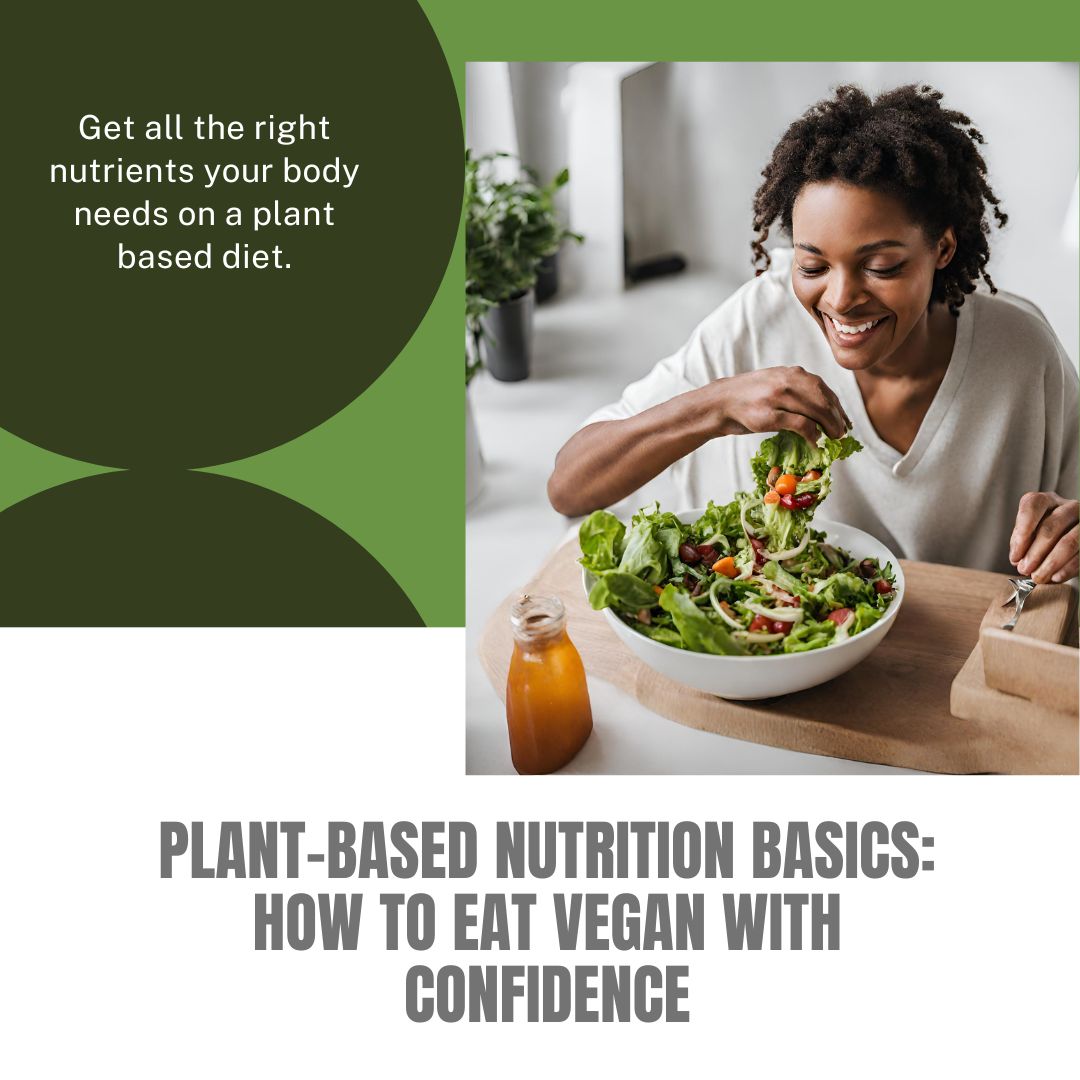
We’ve all been there: standing in the grocery store aisle, staring at a block of tofu and wondering, Is this actually enough? The shift to a plant-based lifestyle is usually sparked by a “why” – maybe it’s for the planet, a love for animals, or a desire to feel more vibrant. But shortly after that spark, the “how” kicks in. We start hearing whispers about B12, iron, and the “miracle” of protein. It can feel like you need a chemistry degree just to make dinner.
The truth is that Plant-Based Nutrition Basics don’t have to be complicated. Once you understand how your body interacts with plants, the stress melts away, replaced by a sense of empowerment.
Quick Note: The information in this blog is for general informational purposes only and is not intended as medical advice. I am not a healthcare professional, and while this post is based on research and personal experience, individual nutritional needs vary. If you have specific health concerns, consult a registered dietitian or healthcare provider for personalized guidance.
Beyond the “Honeymoon”: Why the Basics Matter
When you first go plant-based, there is often a “honeymoon phase.” You’re eating more fiber and antioxidants than ever before, and you feel like a superhero. But a few months down the line, some people start to feel the “vegan slump.”
This usually happens because we focus so much on what we’re removing (meat and dairy) that we forget what we need to add. Plants are naturally less calorie-dense. If you eat the same volume of food as you did before, you might actually be under-fueling. Understanding the basics ensures that your energy stays high long after the initial excitement wears off. It’s about building a foundation that supports your life, not just a temporary diet.
The Strategy of “Crowding Out”
When people think of a “diet,” they often think of restriction and “no” lists. But the most successful plant-based eaters focus on addition. Instead of obsessing over what you “can’t” have, focus on “crowding out” the less-nutritious stuff with the good stuff.
Start by adding a scoop of berries to your breakfast or an extra handful of greens to your pasta. When you fill your plate with the Plant-Based Nutrition Basics we are discussing, there is naturally less room for the highly processed “vegan junk foods” that can leave you feeling sluggish. It’s a much kinder, more sustainable way to eat.
The Protein Puzzle: Quality and Quantity
If I had a nickel for every time a vegan was asked, “But where do you get your protein?” I’d have a very full piggy bank. It’s the number one concern for beginners, but it is often misunderstood.
Protein isn’t just one “thing” – it’s a collection of building blocks used to repair your muscles, create hormones, and keep your immune system strong. In the plant world, protein is everywhere. It’s in your morning oats, your lunchtime lentils, and even your dinner broccoli. The key isn’t finding a “replacement” for meat; it’s about realizing that by eating a variety of whole foods, you are naturally hitting your targets.
Understanding the Building Blocks: Amino Acids
To really master Plant-Based Nutrition Basics, we have to talk about amino acids. Think of protein like a Lego castle. The castle is the protein, and the individual Legos are amino acids. There are 20 different amino acids, but nine of them are “essential,” meaning our bodies can’t make them – we have to eat them.
There is an old myth that you have to eat “complementary proteins” at every single meal (like beans and rice) to get a “complete” protein. Science has since shown us that our bodies are much smarter than that. Your liver actually stores amino acids throughout the day. If you have grains at breakfast and legumes at dinner, your body puts those Legos together to build that castle for you. You don’t need to overthink the math at every meal; you just need to keep your plate diverse.
Making Your Food Work Harder for You
You don’t need a lab coat to get the most out of your meals. Sometimes, it’s just about how you plate things! Think of these as “kitchen hacks” for better nutrition:
- Iron’s Best Friend: Plant-based iron (found in things like big bowls of spinach or lentil soup) is a bit shy. It needs a “buddy” to help it out. A simple squeeze of lime or a side of orange slices provides enough Vitamin C to make that iron much more effective.
- The Fat Factor: Some of the best nutrients in your colorful salads actually need a little bit of fat to be fully enjoyed by your body. Adding a handful of pumpkin seeds or a drizzle of tahini dressing isn’t just about flavor – it helps make sure all those vitamins are actually “sticking” so you get the energy you are looking for.
The Great Fiber Shift
One of the biggest Plant-Based Nutrition Basics that nobody tells you about is the “fiber adjustment.” When you move toward a plant-heavy plate, you are likely doubling or even tripling your fiber intake. This is amazing for your long-term health, but your digestive system might need a week or two to catch up.
If you feel a little bloated at first, don’t panic! It’s just your gut bacteria getting used to the new (and improved) menu. My best advice for beginners? Drink plenty of water and maybe introduce those beans a little more gradually. Your body will thank you once it finds its new rhythm.
Navigating the “Hidden” Essentials
While protein gets all the spotlight, the real “VIPs” of a vegan diet are often the ones we can’t see.
- The B12 Factor: This is the one non-negotiable. Because our modern food system is so “clean,” we no longer get B12 from the soil on our veggies. For a beginner, finding a reliable supplement or fortified food is a vital step in your journey.
- The Omega Balance: We often hear about fish oil, but the ocean’s fish get their Omega-3s from algae! You can go straight to the source with an algae-based supplement, or keep flax and chia seeds in your daily rotation to support your brain and heart health.
Moving Forward with Confidence
Building a healthy lifestyle is a marathon, not a sprint. You don’t have to be perfect on day one. In fact, obsessing over every micro-nutrient can take the joy out of eating.
If you’re feeling overwhelmed, start small. Focus on the basics first: eat enough calories, vary your protein sources, and don’t forget your B12.
- Get Organized: A little preparation goes a long way. Start by looking at our list of PLANT-BASED PANTRY STAPLES to see how easy it is to keep the “good stuff” on hand.
- Map Your Journey: If you want a step-by-step guide on how to transition without the stress, head over to our PLANT-BASED ROADMAP.
By focusing on variety and listening to your body, you aren’t just “going vegan” – you are learning how to thrive.
Deepen Your Knowledge: Expert Resources
While mastering Plant-Based Nutrition Basics is about everyday habits, you may want to explore the more clinical side of plant-based science. These organizations offer extensive research and evidence-based guides to help you dive deeper into the data:
- ACADEMY OF NUTRITION AND DIETETICS: A great resource for science-backed information on plant-based diets.
- PHYSICIANS COMMITTEE FOR RESPONSIBLE MEDICINE: Offers meal planning guides and the latest research on plant-based nutrition.
- WORLD HEALTH ORGANIZATION: Provides insights on how plant-based diets impact health, sustainability, and the environment.
Common Questions About Plant-Based Nutrition
Absolutely. While tofu and tempeh are great staples, you can easily meet your needs through lentils, chickpeas, black beans, quinoa, hemp seeds, and nuts. Soy is just one of many protein-rich plants available.
While a diverse diet provides most nutrients, Vitamin B12 is a non-negotiable for vegans as it isn’t found in plants. Many people also choose to supplement Vitamin D or Algae-based Omega-3s. It is always best to check with a healthcare provider to see what fits your specific needs.
It doesn’t have to be! In fact, some of the most budget-friendly foods on the planet are plant-based staples like dried beans, rice, oats, and potatoes. Buying in bulk and choosing seasonal produce are great ways to keep costs down.
If you feel tired, it’s often because you aren’t eating enough calories. Plants are less calorie-dense than animal products, so you may need to eat larger portions or add more healthy fats like avocado and seeds to maintain your energy levels.

Leave a Comment