If you’ve ever wondered about the difference between plant-based vs vegan eating, you’re not alone. While both approaches prioritize plant foods, they’re often used interchangeably – even though they don’t always mean the same thing. Understanding the distinction can help you choose an approach that fits your health goals, values, and lifestyle without pressure or perfection.
This article is for you if you’re curious about eating more plants, feeling unsure about labels, or simply looking for a realistic way to make plant-forward choices that feel good long term. There’s no single “right” way to eat – just the way that works best for you.
Plant-Based vs Vegan: What’s the Difference?
While both vegans and plant-based eaters center their meals around plants, the key difference comes down to motivation and scope.
Think of plant-based vs vegan eating as a spectrum, with veganism at the most restrictive end.
Plant-based eaters typically focus on food choices, emphasizing fruits, vegetables, whole grains, and legumes for health and environmental benefits. Some people who eat plant-based may occasionally include animal products like eggs or dairy, while others avoid them entirely but don’t follow a strict lifestyle label.
Vegans, on the other hand, extend their philosophy beyond food. Veganism is rooted in ethics and animal welfare, which means avoiding animal products in all areas of life – including clothing, cosmetics, and household items.
Neither approach is inherently “better.” The difference lies in how far along the spectrum you choose to go and why.
Why Both Plant-Based and Vegan Eating Focus on Plants
A diet rich in fruits, vegetables, whole grains, and legumes supports overall health and environmental sustainability, regardless of where you fall on the plant-based vs vegan spectrum.
Research, including findings from STANFORD MEDICINE’S TWIN RESEARCH STUDY, links plant-forward eating patterns to a reduced risk of chronic conditions such as heart disease and type 2 diabetes. Eating more plants can also support weight management, improve energy levels, and promote gut health.
From an environmental perspective, reducing animal product consumption helps lower greenhouse gas emissions and conserves natural resources. Whether you go fully vegan or simply eat more plant-based meals, the benefits add up.
Finding Your Place on the Plant-Based vs Vegan Spectrum
Plant-based eating doesn’t have to be all or nothing. Many people move fluidly along the spectrum depending on their needs, values, and life stage.
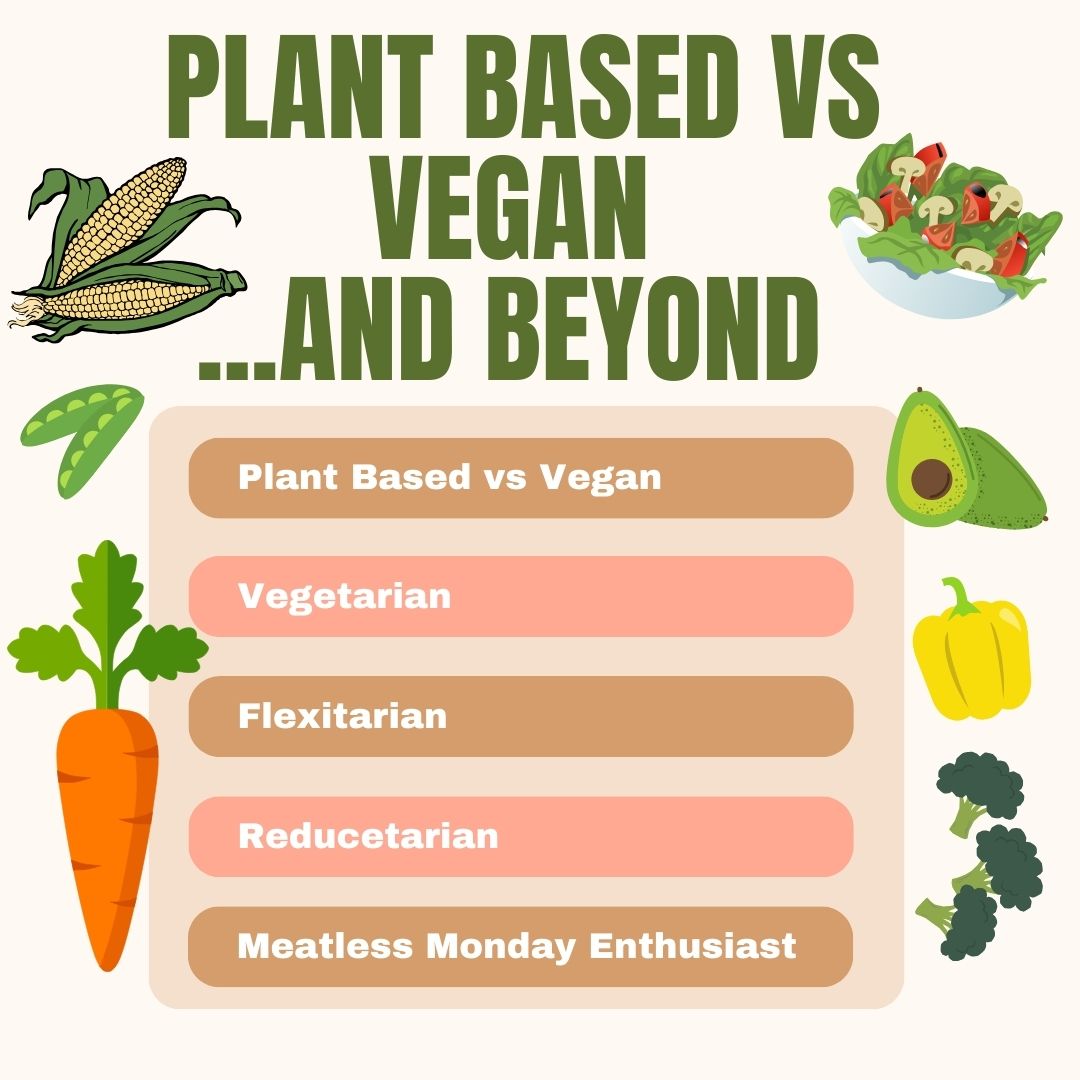
Here are some common approaches you might recognize:
Strict Vegan
Vegans avoid all animal products, including meat, dairy, eggs, and honey. Instead, they rely on creative plant-based swaps – cashew cheese instead of dairy cheese, lentil soup instead of beef stew, or jackfruit in place of pulled pork. Thanks to accessible PLANT-BASED SWAPS, it’s easier than ever to recreate familiar flavors.
Practical Transition Tip: Start with one simple swap, like plant-based milk or a meatless version of a favorite dish.
Vegetarian
Vegetarians eliminate meat but may still eat dairy and eggs. This approach allows flexibility while reducing meat consumption and is often a stepping stone toward more plant-based eating.
Practical Transition Tip: Experiment with plant-based proteins like lentils, chickpeas, tofu, and tempeh in meals you already enjoy.
Flexitarian
Flexitarians primarily eat plant-based meals but occasionally include meat or animal products. This flexible approach appeals to those who want health and environmental benefits without strict rules.
Practical Transition Tip: Try designating a few plant-based days each week and build from there as you discover new recipes.
Reducitarian
Reducitarians focus on reducing meat rather than eliminating it. This gradual shift supports sustainability and makes long-term change feel more manageable.
Practical Transition Tip: Aim for plant-based breakfasts and lunches while allowing flexibility at dinner.
Meatless Monday Enthusiast
Meatless Monday encourages skipping meat one day a week. It’s a simple, approachable way to start eating more plant-based meals.
Practical Transition Tip: Plan ahead with easy plant-based meals so your meatless day feels effortless, not stressful.
No matter where you land, you don’t need to follow these paths in order – or at all. Every step toward more plant-forward eating counts.
A Quick Nutrition Reassurance
One common concern with plant-based vs vegan eating is nutrition, especially protein. The good news is that a well-balanced plant-based diet can provide everything your body needs when it includes a variety of whole foods.
Legumes, tofu, tempeh, nuts, seeds, and whole grains all contribute protein, while leafy greens, beans, and fortified foods help support key nutrients like iron and B12. Variety is the goal, not perfection.
Remember, You’re the Chef
Plant-based eating should feel empowering, not restrictive. Pay attention to how foods make you feel, experiment with flavors, and give yourself permission to evolve over time. What works for you today might shift tomorrow – and that’s okay.
To make things easier:
- Stock your kitchen with PLANT-BASED STAPLES like beans, lentils, whole grains, and spices
- Use frozen fruits and vegetables for convenience and affordability
- Rely on flavorful sauces and dressings to keep meals exciting
- Cook in batches to simplify busy weeks
- Connect with others through plant-based community resources like social media for inspiration and support
By embracing plant-based eating, you’re not just nourishing yourself – you’re also contributing to a healthier planet and a more compassionate world. Explore your plant-based vs vegan options, grab your fork, dive into the deliciousness, and enjoy the journey toward a plant-powered lifestyle.
Plant-based eating focuses primarily on the foods you eat, emphasizing fruits, vegetables, whole grains, and legumes, often for health or environmental reasons. Veganism extends beyond diet to avoid all forms of animal exploitation, including in clothing, cosmetics, and household products.
Absolutely! Many people follow a mostly plant-based diet while occasionally including animal products like dairy or eggs. The key is finding an approach that works for your lifestyle and goals without feeling restricted.
Yes, when well-balanced, both diets can provide all the nutrients your body needs. Including a variety of whole foods like legumes, grains, nuts, seeds, and fortified products ensures protein, iron, B12, and other key nutrients.
Not at all. Plant-based and vegan eating exist on a spectrum. You can adjust your approach over time, try new recipes, or move along the spectrum as your preferences and lifestyle evolve. Every step toward plant-forward eating counts.