
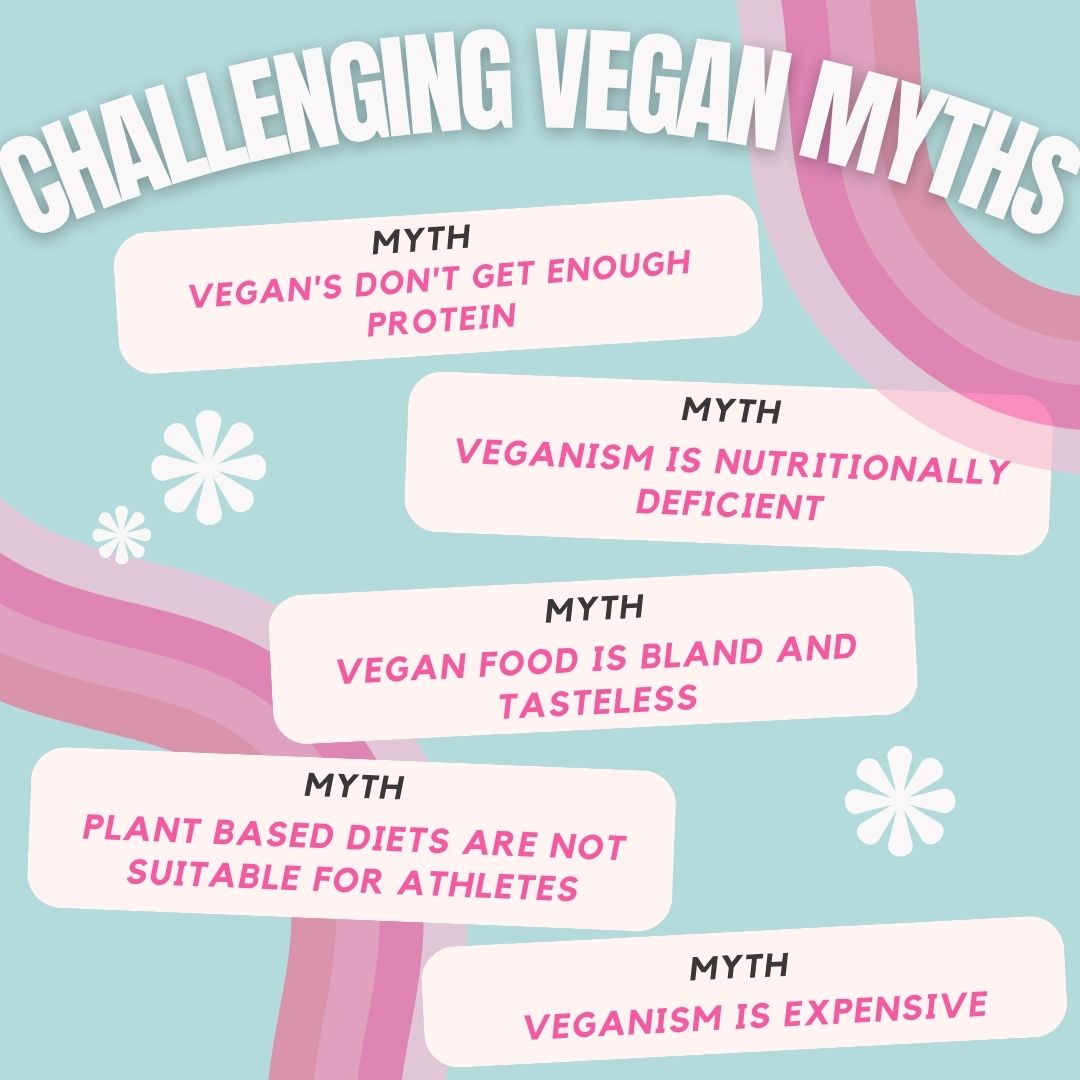
Let’s face it – there are a lot of vegan myths floating around. Maybe you’ve heard it’s expensive, not healthy, or just too hard to keep up with. If you’ve been curious about going plant-based (or just want to eat more plants), chances are you’ve bumped into at least a few of these myths along the way.
The truth? A plant-based lifestyle can be simple, affordable, and nourishing – with some great perks for your health, your wallet, and the planet.
One quick note before diving in – the information in this blog is not meant to be medical advice, just some practical information to bust some common vegan myths and make plant-based living feel less overwhelming. Your healthcare provider is always the best resource for what works for your body specifically.
What Is a Plant-Based Diet?
A plant-based diet focuses on foods that come from plants – vegetables, fruits, whole grains, legumes, nuts, and seeds – while minimizing or eliminating animal products. It does not have to mean going fully vegan overnight. Some people go all in, others simply add more plants to what they already eat. Both approaches count, and both make a difference.
Breaking Down the Most Common Vegan Myths
Let’s clear the air and bust 10 of the most common vegan myths – and give you the tools to make plant-based living actually work for you.
Myth #1: Vegan Myths About Protein – “You Can’t Get Enough”
One of the most widespread vegan myths. But plants are packed with protein – think lentils, tofu, beans, quinoa, tempeh, and even vegetables. Here is a quick look at what some of these powerhouses deliver:
- Lentils – about 18g of protein per cooked cup
- Tofu – about 20g per cup
- Chickpeas – about 15g per cooked cup
- Quinoa – about 8g per cooked cup
- Tempeh – about 31g per cup
The Academy of Nutrition and Dietetics published a position paper stating that appropriately planned vegetarian and vegan diets are healthful, nutritionally adequate, and may help reduce the risk of certain diseases – including heart disease, type 2 diabetes, hypertension, and certain cancers. They also note that these diets are appropriate for all stages of life, including pregnancy, childhood, and athletic performance. You can read the full position paper on NIH PUBMED for the complete findings.
Try this: Rotate your proteins – make a lentil soup one night, toss chickpeas into your salad, or stir-fry tofu with veggies and rice.
Myth #2: “Plant-Based Eating Is Expensive.”
Some people assume it means $12 vegan cheese or specialty items every week. But the heart of a plant-based diet is built around staples like rice, beans, oats, frozen veggies, potatoes, and peanut butter.
In fact, a 2021 study from Oxford University found that eating plant-based food can cut grocery costs by up to 29%. View the article: SUSTAINABLE EATING IS CHEAPER AND HEALTHIER.
Try this: Focus on whole-food staples. If you’re not sure what to buy, check out the guide to PLANT-BASED STAPLES for your plant-based kitchen.
Myth #3: “You Have To Go 100% Vegan Overnight.”
Nope! Going all-in is not required. In fact, easing into it often leads to more lasting changes – and that is true for just about any lifestyle shift we take on.
Try this: Start with one plant-based meal a day – like oatmeal for breakfast or a veggie-packed stir-fry for dinner. Let it grow from there.
Myth #4: “You Won’t Feel Full Without Meat.”
Feeling satisfied is all about fiber, healthy fats, and protein – all of which you can get from plants. Fiber in particular helps you feel full longer, and plant-based foods are loaded with it. If you are just getting started and want to know which foods to reach for first, BEGINNER PLANT-BASED FOODS is a great place to start.
Try this: Add healthy fats (like avocado or tahini) and protein (like beans or lentils) to your meals. Whole grains like brown rice and oats also help you stay fuller longer.
Myth #5: “Plant-Based Diets Are Automatically Healthy.”
Not always! French fries, soda, and vegan cookies are still processed foods. A healthy plant-based diet focuses on whole foods – not just what is missing (like meat or dairy).
Try this: Aim for mostly whole, unprocessed foods – veggies, fruits, whole grains, legumes, nuts, and seeds. A simple rule of thumb: if it grew from the ground or a plant, it is probably a solid choice.
Myth #6: “You’ll Be Tired or Weak Without Meat.”
This is one of those vegan myths that keeps a lot of people stuck. But studies show that plant-based diets can support energy levels and even athletic performance. Many top athletes across all sports have made the switch – and the science is backing them up. The documentary GAME CHANGERS takes a deep dive into how plant-based eating can fuel performance, strength, and recovery.
Try this: Include iron-rich foods like lentils, spinach, and fortified grains. And do not overlook B12 – a key nutrient for energy and nerve function that is worth supplementing on a plant-based diet.
Myth #7: “It’s Hard To Get All Your Nutrients.”
While energy and performance get a lot of attention, this myth is really about the micronutrients – the vitamins and minerals that keep everything running quietly in the background. The good news is that a well-planned plant-based diet can cover most of your bases. The key is variety, plus a little attention to a few specific nutrients.
Try this: Mix up your meals and eat the rainbow. Include fortified foods or supplements for B12, and talk to your doctor about vitamin D and iron if you are just starting out.
Myth #8: “You’ll Lose Muscle if You Stop Eating Meat.”
Not true! Many plant-based athletes – including Olympic-level competitors – thrive without animal protein. Muscle is built with resistance training and adequate protein, both of which a plant-based diet can absolutely support. Browse PLANT-BASED SWAPS to find easy substitutes for the proteins you already cook with.
Try this: Pair strength training with foods like tofu, tempeh, lentils, and protein-rich grains like farro or quinoa.
Myth #9: “You’ll Miss Your Favorite Comfort Foods.”
These days, almost any recipe can be made plant-based – from mac & cheese to burgers to chocolate chip cookies. It is easier than ever to put a plant-based spin on your favorites. There is a plant-based twist for just about any classic dish, and the EASY PLANT-BASED RECIPES library is a great place to start exploring. It is always growing, and already covers a solid range of flavors, cuisines, and cravings – so there is something for just about everyone.
Try this: Search for plant-based versions of your favorites – you might even like them better!
Myth #10: Vegan Myths About the Environment – “It’s Just a Trend.”
The movement toward plant-based eating is grounded in real science – supporting health, reducing chronic disease risk, and lowering environmental impact. And that last point is worth pausing on. Research consistently shows that plant-based diets produce significantly fewer greenhouse gas emissions and use far less land and water than diets centered on animal products. This is not a trend – it is a long-term shift with real, measurable impact.
Try this: Focus on your “why.” Write it down, put it somewhere visible, and come back to it on the days when it feels hard. Whether it is your health, the planet, or compassion for animals – staying connected to your reason is what keeps the momentum going.
Bonus: “Vegan Food Is Boring.”
This one deserves a spot on any list of vegan myths worth busting. Plant-based cooking is full of color, flavor, spice, and variety. Global cuisines offer tons of naturally plant-based dishes – curries, grain bowls, stir-fries, tacos, and more. The only limit is how adventurous you want to get.
Try this: Pick one new spice or herb each week and experiment with it. Plant-based eating can be anything but boring.
Make It Work: Simple Action Plan
Feeling inspired? Here is how to take the next step – no all-or-nothing thinking required:
- Pick one meal a day to make plant-based. Breakfast is a great starting point!
- Stock up on staples – beans, grains, frozen veggies, and easy sauces make fast meals doable.
- Plan just 3 meals for the week to start. Keep it simple (think: chili, stir-fry, and pasta). Use MEAL PLANNING PRINTABLES to make it even easier.
- Add, don’t subtract – focus on all the delicious foods you can eat, rather than what you are leaving out.
- Find support – follow a few plant-based creators or connect with like-minded friends for ideas and encouragement.
Want help getting started? Check out all the ideas and tools on ORGANIZINGAPLANTBASEDLIFE.COM for easy meals, a grocery list, and helpful swaps to make your transition super simple.
Final Thoughts
There are a lot of vegan myths out there, but most of them fall apart when you take a closer look. Going plant-based does not have to be hard or extreme – it can be flexible, flavorful, and fun.
Whether you are curious, just starting out, or already deep into your plant-based journey, every plant-based meal is a step in the right direction – for your health and for the planet.
Your Most Common Questions About Vegan Myths
Before you go, here are some of the questions we hear most often about vegan myths, along with some straightforward answers to help you get started.
Yes – and this is one of the most persistent vegan myths out there. Foods like lentils, tofu, tempeh, chickpeas, and quinoa are all solid protein sources that can easily meet your daily needs when you eat a varied diet.
Not at all. Even adding one or two plant-based meals a week can have a positive impact on your health and grocery budget. The goal is progress, not perfection – every plant-based meal counts.
B12 is the big one – it is difficult to get from plants alone and worth supplementing. Iron, vitamin D, and calcium are also worth keeping an eye on, especially when you are first starting out. A quick conversation with your healthcare provider can help you figure out what your body specifically needs.
The staples of a plant-based diet – beans, lentils, rice, oats, and frozen vegetables – are some of the most affordable foods at any grocery store. Specialty vegan products can add up, but a whole-food plant-based approach is often cheaper than a meat-centered one.


Leave a Comment